
Science
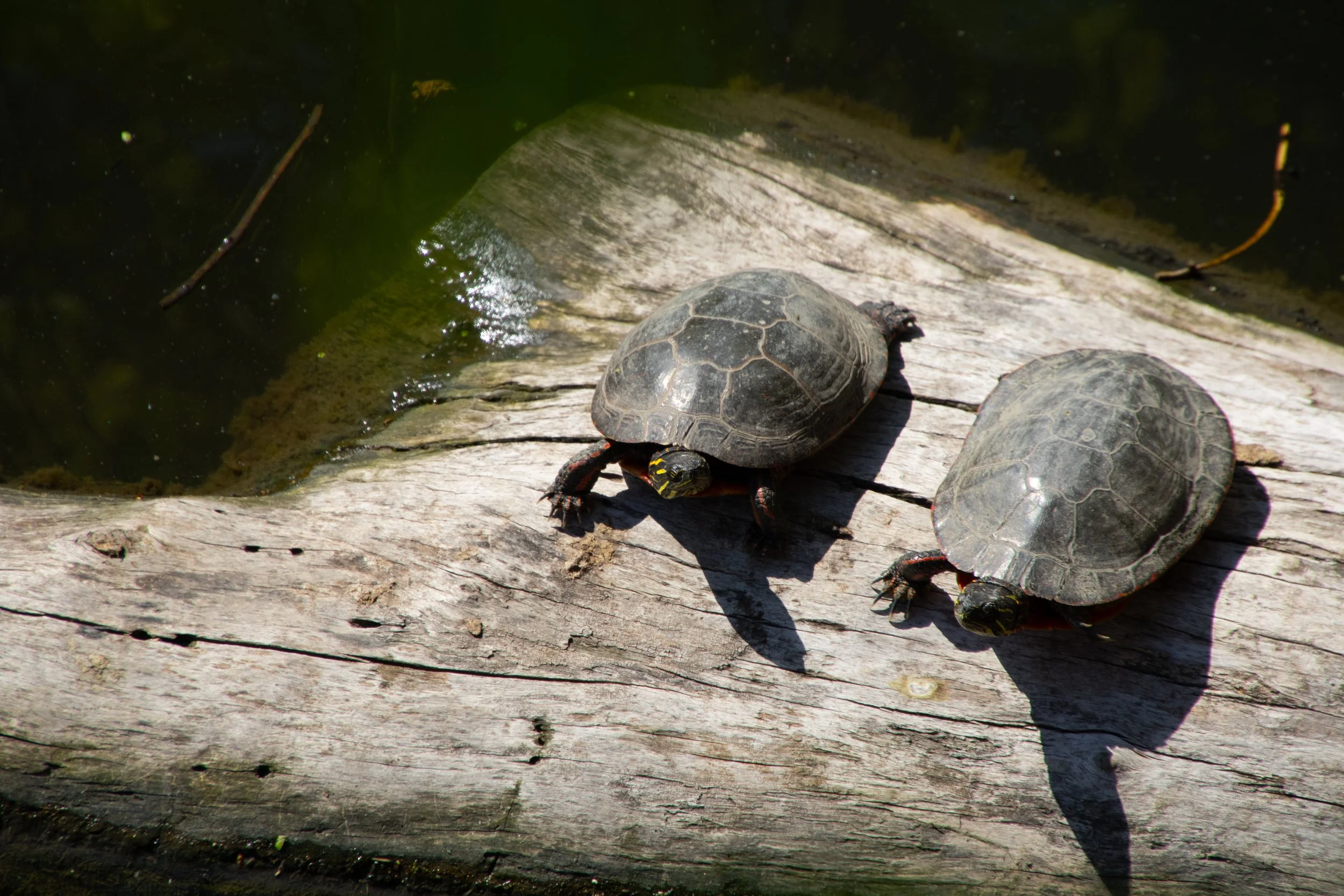
Our scientific research aims to document our rapidly-changing urban waterways, informing our restoration efforts!
Macroinvertebrates
Gauging ecosystem health using an indicator clade
Macroinvertebrates, the unsung heroes of river ecology, are organisms including aquatic insect larvae, small mollusks, crustaceans, aquatic worms, and essentially anything tiny that lacks a backbone but is still visible without a microscope.
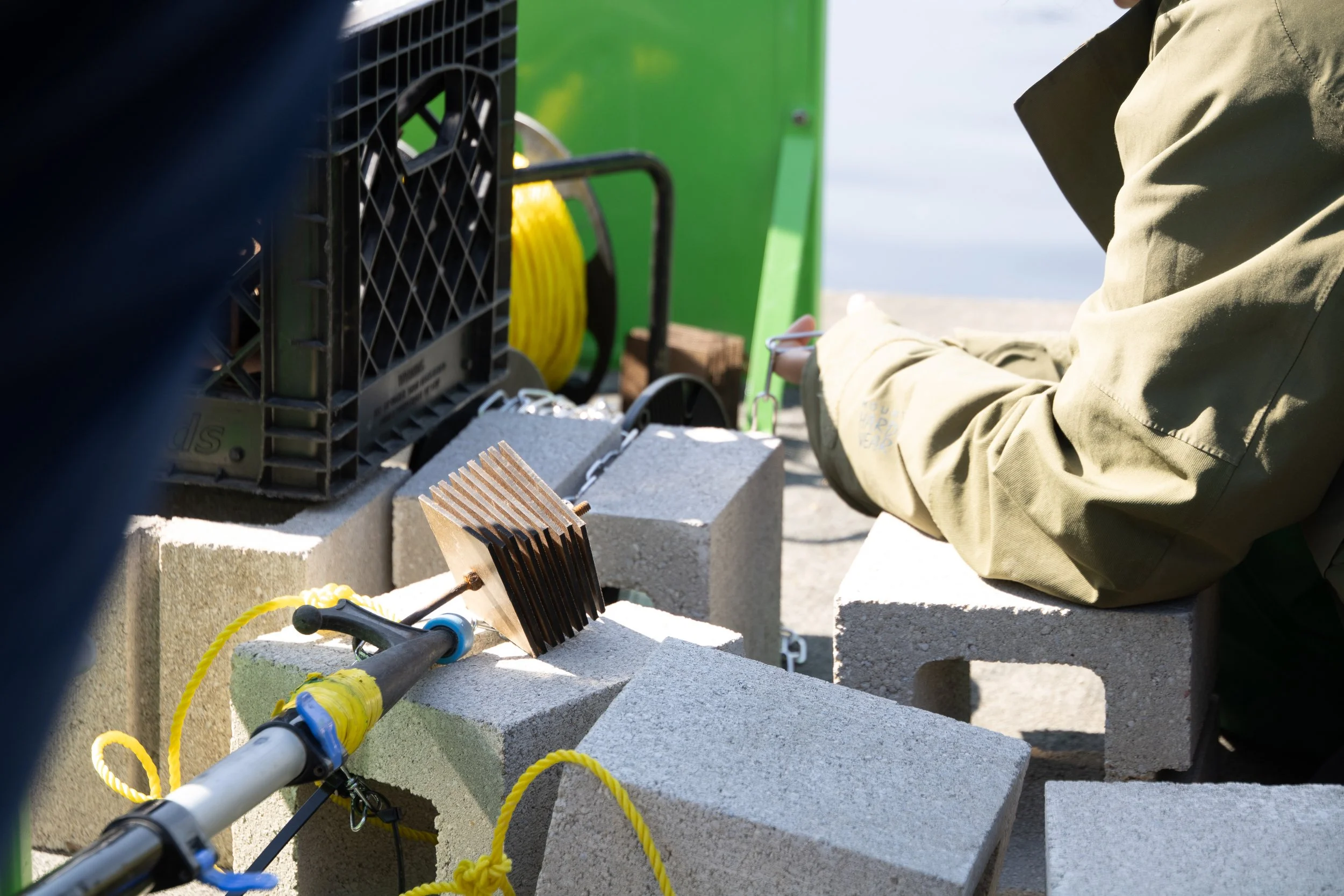
Why care about macroinvertebrates? Because they care about you, and do a LOT of stuff for you because of it! They break down organic debris and helping recycle the nutrients back into the ecosystem, mostly by getting eaten (a thankless task). Aquatic macroinvertebrate populations are routinely used as indicators of stream health, and by studying the changes in macroinvertebrate populations surrounding our islands, we can determine if our islands are supporting more diverse and abundant macroinvertebrate populations, as we would suspect to happen. We measure this by deploying “Hester-Dendy” apparatuses - macroinvertebrate habitats that we leave in the river for 6-8 weeks. As the gaps fill up with sediment, macroinvertebrates crawl in. We then pull the whole structure up and assess the contents, which allows us to get a snapshot of the community living in the river.
Northeastern Illinois University and DePaul University have supported work from undergraduate researchers Steph Mueller and Sam Garcia. Steph has developed our internal Bugs in Urban Rivers Program (BURP) which is our continuous monitoring program at the Wild Mile, Bubbly Creek, and River Park. The analysis of our samples from this research is conducted by trained volunteers, making it an exciting community science project!
Initial data collection after the installation of our pilot gardens demonstrated higher species diversity as measured by the Shannon Diversity Index for samples taken near our artificial floating wetlands, versus those collected in areas with seawall. These promising initial results are outlined in a 2023 publication, and support the necessity of wetland and riparian ecosystems for this crucial category of river organisms.
Water Chemistry
Assessing our restoration work’s impact on broader aquatic conditions
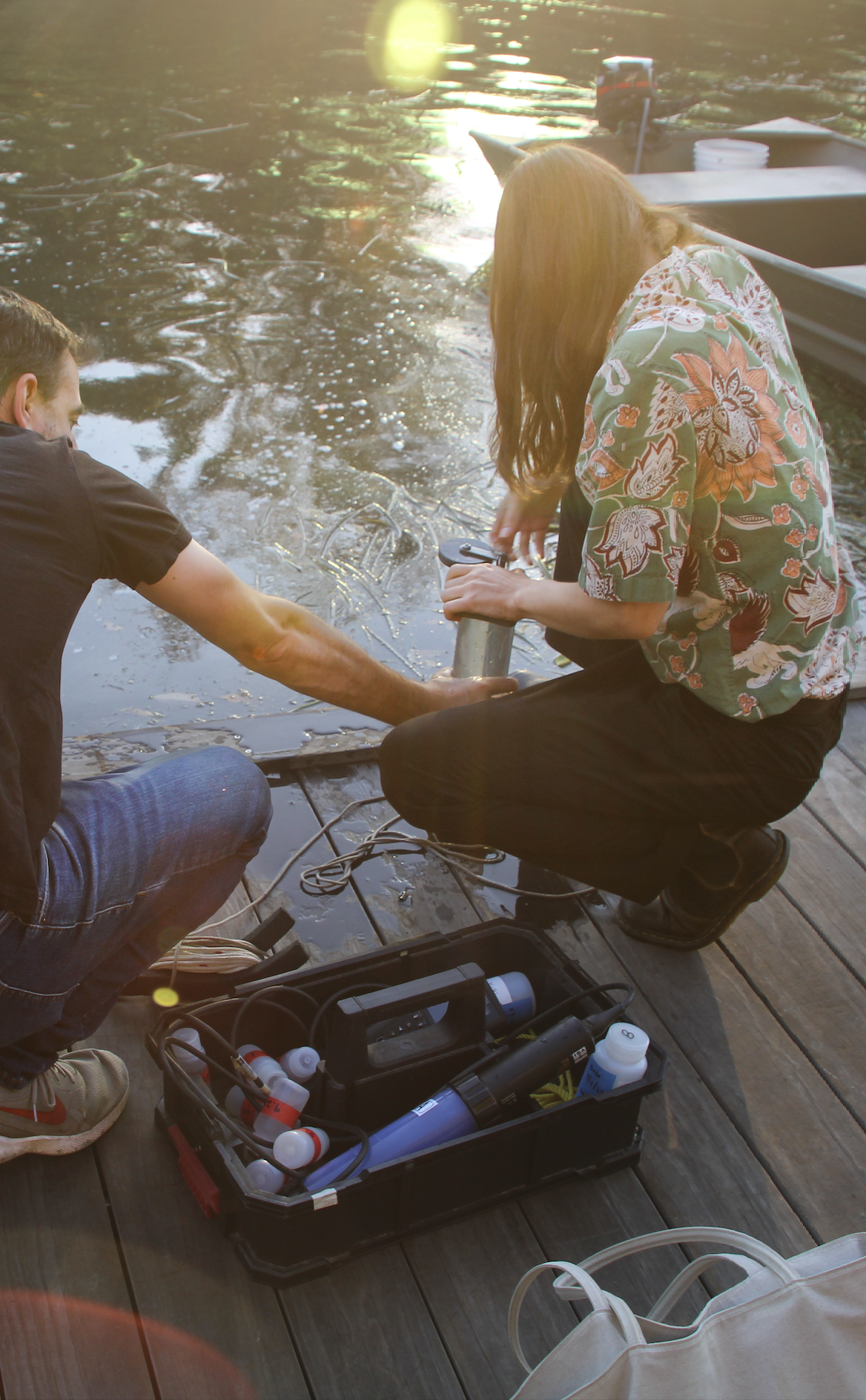
The success of our projects in improving the health of urbanized waterways begins with studying the most direct mechanisms by which the environment is changed by our interventions. In the Chicago River, we’re interested in a number of chemicals, such as heavy metals, nutrients, and chloride, oxygen, chlorophyll, and others. Since 2018, Urban Rivers has worked with the lab of Dr. Eric Peterson from the geology department of Illinois State University to assess the presence of these chemicals in our waterway.
Studying the hydrology and nutrient cycling of streams and rivers throughout Illinois, Dr. Peterson’s support for our water chemistry research has been key, and led to publication of a paper in the journal Hydrology in 2021 that demonstrates the uptake of phosphorous and nitrogen as water filters through the root systems of the floating wetlands. Promising results included lower concentrations of phosphate and nitrate-as-nitrogen downstream versus upstream of our artificial floating wetlands, indicating potential uptake of these nutrients by the wetland plants. Other co-authors Emmett and Abigail, former graduate students in the Peterson lab, focused on heavy metals and nutrients respectively, and their work has been critical in evaluating the ability of floating wetlands to mitigate pollutants.
Future research planned with Illinois State includes multidisciplinary work tying water chemistry improvements to community wellbeing, and to study how river-based green spaces may impact gentrifying areas of the city. Our River Ranger volunteers also continue to gather water samples from the Wild Mile on a weekly basis, and an eventual analysis of these samples for key chemicals will help us paint a broader picture of the impact of the installation on water chemistry in the area.
Beavers
Tracking movement and behavior as beavers return to our industrialized waterways
Believe it or not, beavers are a common sight along the Chicago River! Surprisingly well-adapted to urban waterways, they den and forage along sections of naturalized riveredge, or areas where industrial infrastructure has sufficiently degraded. For the past few years, baby beavers have become a common summer sight at the Wild Mile. They feed on a wide range of plants, and chew bark off of low-hanging tree branches and riverside trunks. Anyone hoping to install trees in greenspaces near the river, ourselves included, tend to learn the hard way that beaver fencing is a necessity.
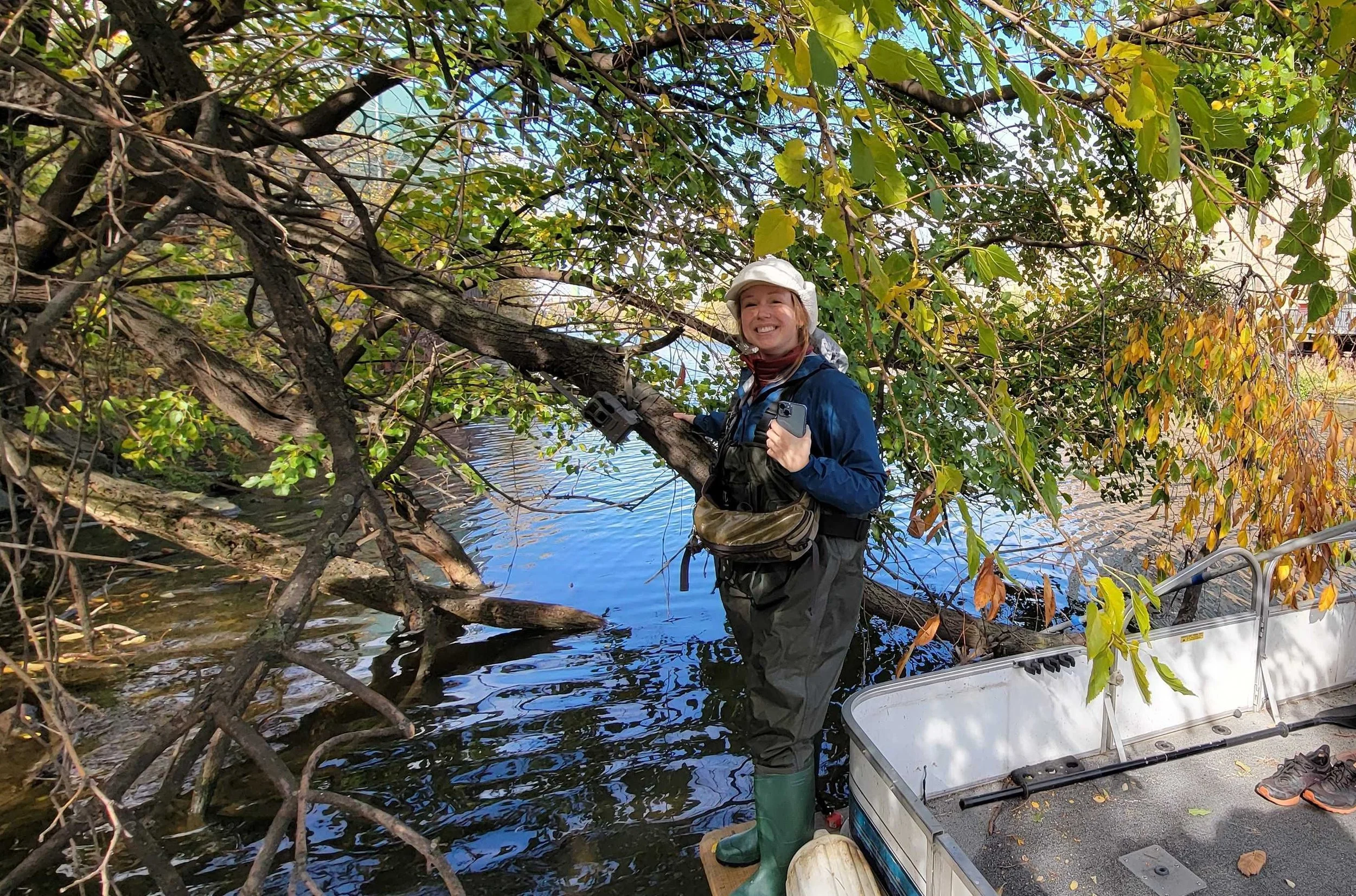
In 2024, we began working with graduate student Sammie Clark to monitor beaver activity, hoping to get a sense of where they prefer to den and feed. Sammie placed wildlife trail cameras at select locations along the Chicago River, with a focus on the South Branch’s Bubbly Creek area. These cameras are motion-sensitive, and will capture beaver activity in these regions. Specifically, Sammie will be comparing beaver activity between naturalized river edge and areas in which we’ve installed artificial floating wetlands, hopefully informing our future efforts to support these charismatic creatures with restoration projects.